Page last updated: March 2026
The information on this webpage was adapted from Talking to Kids About Cancer (2026 edition). This webpage was last updated in March 2026.
Expert content reviewers:
- Joanna Fardell, Senior Research Fellow and Deputy Director, The Behavioural Sciences Unit, School of Clinical Medicine, UNSW Medicine, UNSW, NSW
- Dr Diana Adams, Medical Oncologist, Macarthur Cancer Therapy Centre and GenesisCare Campbelltown, NSW
- Emma Bowne, 13 11 20 Consultant, Cancer Council SA
- Ken Colbert, Consumer
- Cara Dahl, Team Leader – Online Support, Cancer Hub, and ACA Registered Counsellor, NSW
- Elizabeth Egan, Clinical Nurse Consultant – Oncology, St John of God Subiaco Hospital, WA
- Dr Maria Ftanou, Director, Psychosocial Oncology Program, Peter MacCallum Cancer Centre, VIC
- Nat Fuss, Senior Clinician, Canteen, SA
- Helena Hobson, Senior Social Worker, Cancer Centre, Fiona Stanley Hospital and South Metropolitan Health Service, WA
- Nadine Macbeth, Social Work Team Leader, Cancer and Chronic Care, Westmead Hospital, NSW
- Damian Ragusa, General Manager – Services and Programs, Camp Quality
- The Team at Redkite
- Alexandra Wright, Consumer
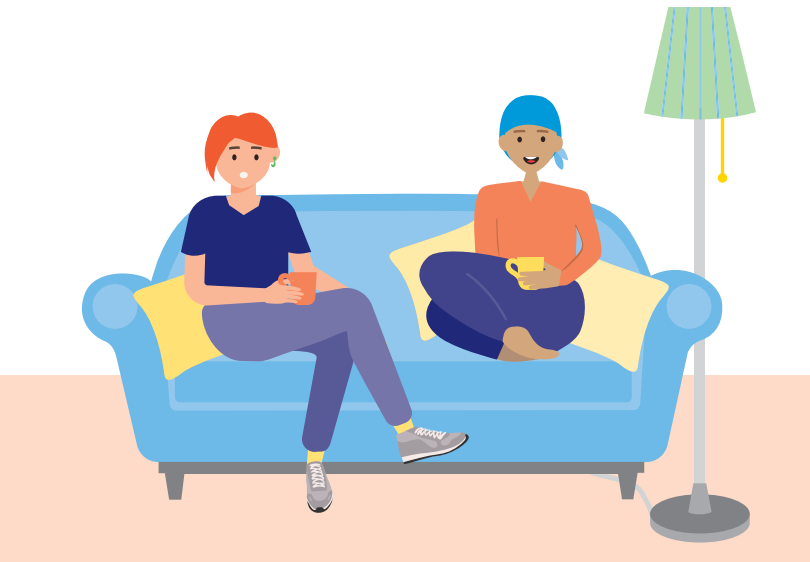
Cancer treatment can be challenging for the whole family, but children and young people often manage better when they know what to expect.
How much detail you provide will depend on the child, your values and your cultural background. While you may not be able to say exactly what will happen, you can promise to follow up and keep your children updated.
What do children need to know?
Providing children and young people with information about the treatment, why and how it is done, and possible side effects can help them understand what to expect in the weeks and months ahead.
Outline the treatment plan
- Let the children be your guide as to how much they already know and how much they want to know about treatment.
- Start with questions such as “Have you heard the word chemotherapy?” or “Do you know what radiation therapy is?”. Then explain the basic facts using language they can understand.
- Check if your kids want to know more, and let them know that they can ask questions throughout the treatment period if they have other queries or concerns.
- Talk to kids about how to search for trustworthy information online.
- Keep children up to date with how long treatment will take and the length of the hospital stay.
- Explain who will be taking care of the person with cancer and the different ways the carers will help.
Explain side effects
It’s important to prepare children for treatment side effects, such as weight changes, fatigue, nausea, scars and hair loss. Explain that:
- not everyone gets all side effects
- people who have the same cancer and cancer treatment will not necessarily have the same side effects
- doctors can’t be exactly sure what will happen to each person.
Tell your children what side effects to expect, based on what the doctor has said, and how these may change how you look or feel.
Talk about ways your children can help you deal with the side effects (e.g. help shave your head or choose a wig). These actions make your children feel included and useful.
Children should know that side effects usually go away after treatment. Hair will grow back, scars will fade – but this often takes time. Reassure your children that they will get used to the changes.
Point out that you’re still the same person as before. Explain that side effects do not mean that you’re getting worse. It’s common for kids to get upset when they see the effects of the drugs, which may include fatigue or vomiting.
They may worry that the treatment is making the cancer worse or that the cancer has progressed. If there are no side effects, reassure them that this doesn’t mean the treatment is not working.
If side effects mean you can’t join in usual family activities, make sure your children understand that it doesn’t mean you’re not interested.
Explain to them what side effects are considered normal. This can be especially important for older teenagers who might worry about when they should call for help.
“I knew that my hair falling out might be very traumatic for the kids. I invited two girlfriends around to help shave my hair off and involved the children in a self-indulgence day. There was lots of laughter, the children got involved in the shaving, and then we all put on make-up and did our nails.” Anna, mother of two children aged 9 and 13
Creative ways to explain cancer and its treatment
A range of creative methods can help explain cancer treatment and explore feelings without talking. You can adapt these suggestions for different ages and interests.
Make up stories and play games
Blow some bubbles in the air to represent cancer cells and challenge your children to pop these cancer bubbles by jumping, slapping or stomping on them.
You can explain to your children that the treatment is “popping” the cancer cells, just like they are popping the bubbles.
Visualise it
Draw a flow chart, map or timeline to show the different stages of the treatment plan. Throughout treatment, you can look at the chart together to see where you are up to.
Say it with music
Listening to different types of music together or getting kids to make up their own music could help kids imagine the impact of different treatments.
(e.g. using percussion to represent destroying the cancer cells).
Keep a journal
Keeping a personal journal or diary can help older primary school children and teenagers to express their feelings. Some children may prefer to write stories or poems.
Draw feelings
Ask your kids to draw what they think cancer is or how different treatments work. Their artwork can show a lot about what they understand or are feeling.
Hospital visits
A visit to hospital can seem strange and confronting for a person of any age, but children’s fears may be worse than the reality. Reassure them that hospitals are special places where people are given good care.
Ask your kids if they want to go to the hospital or treatment centre. Some hospitals may offer a tour for families. If children would prefer not to go, don’t insist on them visiting.
Ask the doctor to explain anything that is confusing or unclear. The nurses and social workers at the hospital are good sources of information, as are Cancer Council’s 13 11 20 information and support consultants.
Once you have an understanding of the treatment, you may find it easier to explain it to your kids.
Preparing for a hospital visit
If children are keen to visit the hospital, tell them what to expect and what they may notice:
- the equipment
- different smells and noises (e.g. beeping)
- how you may look (e.g. connected to tubes, a drip or catheter bag full of urine hanging on the side of the bed)
- doctors and nurses might keep coming in and out to check on patients.
Let your kids decide how long they want to stay. A friend or relative could take them out of the room if they feel overwhelmed. Your kids may want to help by getting you a drink or magazine from the hospital shop.
Small children tend to get bored quickly and want to leave soon after arrival. Bring art materials, books or toys to keep them busy. Or you could simply watch TV or listen to music together.
After the visit, talk to them about how they felt and answer any questions they have. If you have to travel for treatment and your children are unable to visit, you could use video calling on a mobile phone to communicate.
Answering key questions
Q: Does treatment hurt?
For younger children: “Cancer doesn’t always hurt, but if I have pain, the doctors will give me medicine to help make it go away.”
For older children and teenagers: “The cancer treatment may cause me pain. The doctors can give me medicines for pain, but I might have good days and bad. I’ll let you know if I am having a bad day.”
Q: Why do you look so sick when the doctors are meant to be making you better?
Often people who have cancer look perfectly well when diagnosed. It’s only when they have treatment and the side effects kick in that they start to look sick. This can be hard for children to understand.
A: “The doctors are using strong medicine to kill the cancer, but the medicine affects good cells as well as cancer cells. Some days I might feel and look sick, but this doesn’t mean the cancer is getting worse. I will start to feel better when treatment finishes.”
Q: Will your hair come back?
A: “The doctor says I may lose my hair because of the chemotherapy. If I want to, I can wear wigs, scarves or hats until it grows back.”
Q: Does radiation therapy make you radioactive?
A common fear among children is that they can become radioactive by touching you after radiation therapy. With most types of radiation therapy, this is not possible. Your doctor will tell you if you need to take any precautions.
A: “Radiation therapy is like an x-ray. It doesn’t hurt. It’s safe to touch me.”
Q: Why do you need to rest so much?
Children often can’t understand the exhaustion you may feel after treatment. They may resent you not doing as much with them.
A: “The treatment I’m having has made me tired and I need to rest. Let’s make a plan for what we’ll do on a day I have more energy and perhaps today we can do something quiet like watch a movie.”
“My husband, Bruce, had a brain tumour and his personality changed because of it. At the dinner table one night, our 4-year-old, Emma, announced, ‘I wish Daddy was dead.’ I calmly asked Emma what she meant. She replied, ‘I don’t like the man who’s in my Daddy’s body. I want my real Daddy back.’ I could then explain why Bruce’s behaviour had changed.” Debra, mother of a 4-year-old
Family life during treatment
If you are a parent with cancer, you may be keen to keep life as normal as possible for your kids during treatment.
But this can be challenging when you are coping with treatment and recovery, because of frequent trips to the hospital, changes to your appearance or lower energy levels.
You may feel guilty about not being able to do all the usual things with, and for, your kids. There are no easy solutions to this problem, but you can make the most of your good days by doing fun things with the family.
On the not-sogood days, let your kids know, rather than trying to protect them from the reality of how you’re feeling.
Acknowledging disappointment
It is normal for children to think mostly of themselves and how a situation affects them. Some older children and teenagers may seem annoyed about the diagnosis and act as if they don’t care about their parent.
You may find their reaction hurtful or frustrating, but it is common and age-appropriate. It can be helpful to acknowledge your child’s disappointment:
- “I know you’re finding it frustrating that I can’t watch you play soccer like I usually do, but I am not feeling well and I just need some quiet time right now.”
- You may like to tell younger children: “I know you feel upset that I can’t play with you. I am sad too, but I am very tired. Let’s think about what we can do tomorrow when I feel better.”
It’s also important that children and teenagers understand that how they behave won’t affect your health and recovery. Children might assume they have to protect their parent, or act in a certain way or their parent won’t get better.
If you are a parent caring for someone with cancer, such as your partner or your own parent, you may feel like you have little time and energy left for your children.
Although asking for and accepting help can be difficult, it may relieve some pressure and allow you to spend more time together as a family.
Cancer Council’s booklet Caring for Someone with Cancer discusses ways to look after yourself and how to take a break, and includes a list of support services for carers.
Managing emotions
Anger, crying and withdrawal are some of the possible reactions in children. These can be protective responses that allow a child or young person time to deal with the information.
Some children may hide their feelings because they do not want to add to their parents’ stress.
Even if your child’s behaviour doesn’t suggest they are struggling, let them know you appreciate how hard this situation is for them.
Children will express their emotions differently depending on their age and nature. If your kids’ reactions seem unusual, out of character or intense, consider getting some professional support.
Tips to help children manage their emotions
- Encourage kids to identify and name feelings. For younger children, you may need to do this for them (e.g. “You seem like you might be angry” or “You seem really worried”).
- Reassure them that there are no "right" or "wrong" feelings.
- Let them know that anger, guilt and sadness are normal feelings. You feel them too and it is okay to talk about them.
- Discuss ways to manage anxiety and stress.
- Make sure they have plenty of opportunities for physical activity and spending time with friends.
- Provide plenty of physical comfort, such as hugs.
- Offer creative ways for children to express their emotions.
- Create lots of opportunities for humour and fun. Let your children know that it is all right to joke and enjoy themselves. Laughter can often relieve tension and help everyone relax
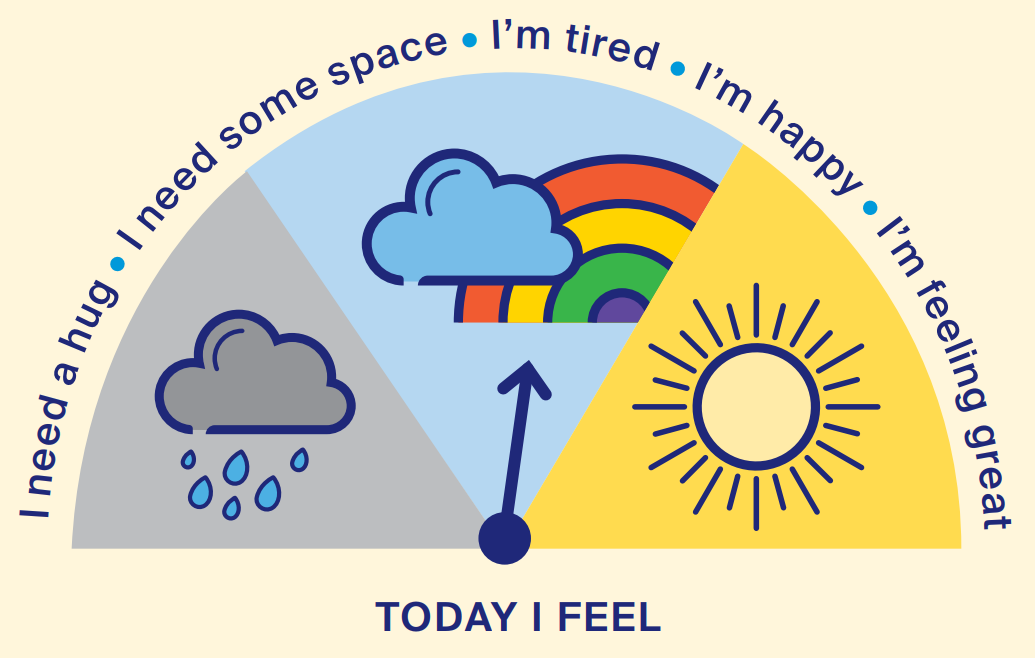
The emotions thermometer
The physical and emotional health of a person with cancer will vary during and after treatment. It can sometimes be hard to let your family know how you’re feeling, and they might find it hard to ask.
An emotions thermometer may help. This simple tool allows you to show how you’re feeling every day. You can make one yourself and ask the kids to help, or there are many versions available online.
Just search for “emotions thermometer”. Choose which feelings to include and add a pointer that moves to the different feelings.
Put the emotions thermometer up where everyone can see it, such as on the fridge or noticeboard.
Encouraging family time
Maintaining routines and family traditions as much as possible will help children and young people feel safe and secure. Sometimes you have to strike a balance between doing regular activities and coping with the effects of the cancer.
During treatment, when life may be disrupted and unsettled, try to protect the time your family has together. Camp Quality offers holiday accommodation and camps to families affected by cancer.
This is often the first break a family has after a cancer diagnosis, and it gives them the chance to relax and reconnect.
Tips to protect family time
- Some families may limit visitors and choose not to answer any phones at mealtimes. Others may welcome some visitors at this time.
- You may want to set some boundaries around when friends phone you, or you might ask them to send an email or keep in touch through social media platforms. There are many ways to keep family and friends updated on how you are doing. You may use a closed Facebook group, set up a chat group on a messaging app, or use CaringBridge.
- Think of things to do together that don’t require much energy. You could read a book aloud, watch a movie, or play a board game or a video game.
- Ask a close friend or relative to coordinate all offers from friends and family to help out with household chores. You could also use an app, such as Gather My Crew or KiteCrew.
- Plan for “cancer-free” time with the family where you don’t focus on the illness but do fun things that allow you to laugh, joke and relax.
“I tried to get some rest during the day so that I was bright and more energetic when the family came home in the evening. I didn’t want them to feel they had a sick mum all the time – I was only sick from the treatment, not from the disease itself.” Liz, mother of three children aged 10, 16 and 18
Spending one-on-one time
When a family member is diagnosed with cancer, it can be difficult for parents to spend one-on-one time with their children. One way to focus your attention and care is to schedule a regular 30-minute session with your child or teenager.
This may help them feel important, valued and understood. Talk with your children about the type of activities and family time that are important to them.
If you have more than one child, you may need to alternate weeks for one-on-one time depending on your energy levels.
Younger children may not have developed the thinking or language skills to describe how they’re feeling, but a play session can help them to express feelings, make sense of events, and understand the world.
Their play may reveal an inner world that you would never know about from what they say.
Teenagers may enjoy spending time with friends, but one-on-one time with you is important. You may like to visit a favourite cafe, go for a walk, watch a movie or listen to music with them.
Maintaining discipline
It can be hard enough to maintain family rules when you’re fit and healthy, let alone when you’re dealing with the emotional and physical effects of cancer treatment or caring for someone with cancer.
Some parents say they feel guilty for putting the family through the stress of cancer, so they don’t want to keep pushing their children to do homework and chores.
Maintaining the family’s usual routines and boundaries during this time can strengthen your children’s sense of security and their ability to cope.
Keeping up children’s chores, encouraging good study habits, calling out inappropriate behaviours, and sticking to regular bedtimes – all require continued and ongoing supervision from adults.
Although some flexibility may be reasonable at this time, a predictable set of boundaries and expectations can be reassuring for children and young people.
Let teenagers know that the usual rules apply for curfews, drug and alcohol use, and sex.
Single-parent families
In any family, a cancer diagnosis can make it challenging to meet everyone’s needs. If you are the only parent in your household, cancer may come on top of an already heavy domestic, financial and emotional load.
Your children will need to help but may end up taking on more responsibility than they are ready for. Ask your friends and extended family to support them.
You can also find out what support services are available in your area by calling Cancer Council 13 11 20 or Cancer Hub.
You may want to get in touch with the Carers Australia Young Carers Network. This organisation runs activities and support groups for young people (aged up to 25 years) who care for a parent with a serious illness.
Even young children may be considered young carers – for example, if they are helping with cooking or cleaning. Camp Quality and Canteen can also offer support to children when a parent has cancer.
Helping around the house
The internet is a good source of information about appropriate jobs around the house for children of all ages. Try searching for “age-appropriate chores”. Some possibilities include:
Ages 2–4
- put toys into toybox
- put books back on shelf
- put clothes into dirty washing basket
Ages 4–8
- set table
- match socks
- help make bed
- help dust
- help put away groceries
Ages 8–12
- make bed
- feed pets
- vacuum
- load and empty dishwasher
- rake leaves
Over 12
- make simple meals
- clean kitchen
- clean bathroom
- wash and hang out clothes
- wash dishes
- wash car
Staying in touch
If you need to travel for treatment, or if you have extended hospital stays, you may be away from your family for long periods. In some cases, both parents may need to travel to a major hospital and leave their children with family members or friends.
The following tips may help you stay in touch. They might also be useful if you don’t need to leave home but want extra ways to communicate with your kids.
Tips for staying in touch
- Ask your kids to make artwork and send you photos of their day.
- Set a time to call home each night when you’re away, then read a favourite story together over the phone or via video calling.
- Write an old-fashioned letter. Kids love finding mail addressed to them in the letterbox.
- Send an email or recorded message when you're feeling up to it.
- Connect through social media or play an online game together.
- Leave notes and surprises for kids to find, such as a note in a lunch box.
- Use private messenger apps for one-on-one chats with teenagers.
- If they’re able to visit, children can bring cards or pictures from home, flowers picked from the garden, or a toy to “mind” you in hospital.