Clinical trials play a critical role in answering questions about the prevention, diagnosis and treatment of cancer, as well as improving psychological, supportive and palliative care outcomes.
Thanks to the health professionals and community members that have conducted or participated in clinical trials, as well as the funders of this research, we have achieved major improvements in overall survival and quality of life for people affected by cancer.
Despite this, recruitment of patients in clinical trials remains an ongoing challenge for the Victorian cancer sector. This is particularly difficult amongst underserved groups including Aboriginal and/or Torres Strait Islander populations, people from rural and regional areas and those of culturally and linguistically diverse backgrounds.
Cancer Council Victoria is committed to increasing investment in clinical trials, improving awareness and access for all Victorians and diversifying cancer research. We work collaboratively with government and the healthcare sector to help patients access clinical trials that may help them to live well and live longer.
“Warren always put his hand up for any extra tests. His theory was that even though none of it worked for him, we would learn something from it to benefit people in the future.” - Klarissa. Read more
Victorian Cancer Trials Link
Our Victorian Cancer Trials Link (VCTL) is a publicly available, searchable online database and mobile app of cancer clinical trials being conducted in Victoria, including those run out of rural and regional hospitals. Healthcare professionals and people affected by cancer can enter specific information about diagnosis and treatment history and be matched with a suitable clinical trial to participate in.
The VCTL was first developed in 2009 and is updated regularly with the help of clinical trial units across the state. If you’re a health professional and would like to add a trial or correct any information on the website, please contact us.
Search VCTL
“What I found good about this is, that when you’re sitting there trying to absorb all these trials and technical terms and everything from the doctors, the site meant you could just read about it in layman’s terms.” - Klarissa.
Cancer Trials Management Scheme
With the support of the Victorian Government, Cancer Council Victoria’s Cancer Trials Management Scheme (CTMS) has invested nearly $20 million since 1988 to support and grow clinical trial capacity across Victoria. By investing in the clinical trials sector, we are fostering innovation in cancer research to save lives and improve equitable access for all Victorians.
Competitive grants
Following the initial investment of $2.3 million in 2017, Cancer Council Victoria and the Victorian Government through the Victorian Cancer Agency are investing $1.5 million in 2021 to support the cancer clinical trials sector through our Cancer Trials Management Scheme competitive grant.
Three projects will be funded for a maximum of three years to address unmet needs and build capacity for clinical trials in cancer survivorship and supportive care..
These types of trials aim to improve the quality of life of people affected by cancer and help inform holistic care. By investing in these projects, we are providing the necessary infrastructure for more clinical trials to be undertaken in these areas and for more Victorians to access the benefits of clinical trials in cancer survivorship and supportive care.
2021 grant recipients
 Title: The COMET Program: Enhancing supportive care trials for people with cancer
Grant recipient: Prof Jennifer Philip, University of Melbourne
Years funded: 2022 - 2024
Summary: Currently there are a large number of people living with a cancer diagnosis who are cared for by community palliative care services. Many of these people are missing out on participating in clinical trials because of their age, having other illnesses or finding it difficult to travel for frequent appointments at treatment centres. However, if given the opportunity, many people in this setting are very interested in being involved with clinical trials.
The COMET Program will build a community palliative care workforce with clinical trial capacity by providing mentorship to clinicians and community palliative care teams. The COMET Program will ensure that trials are designed and delivered appropriately to enable people at home with cancer and their families to participate. This will address two important gaps; equitable access to clinical trials and evidence to inform best care.
“My vision is that all people with cancer have the opportunity to participate in research and clinical trials. This program will help ensure that all aspects of cancer care are underpinned by a strong evidence base, thereby ensuring the best care across the whole cancer experience.”
Read the full report
Title: e-DiSCover: A digital health solution to build capacity for supportive care and survivorship clinical trials for child, adolescent, and young adult survivors of childhood cancer
Grant recipient: Associate Professor Maria McCarthy, Murdoch Children’s Research Institute
Years funded: 2022 - 2024
Summary: Despite improved survival outcomes, children and adolescents treated for cancer are at risk of developing long-term physical and psychosocial difficulties related to their disease or treatment. Referred to as ‘late effects’, these may emerge over months or even years following the end of treatment. Currently, young people and their families receive little information and guidance about these late effects and there are very few clinical trials designed to improve quality of life outcomes.
The aim of the eDiSCover project is to develop the Digital Survivorship Companion (DiSC) app and online platform to provide cancer-related information and enable two-way exchange between young cancer survivors, their families and healthcare providers. It will facilitate equitable access to clinical trials including delivery of trial information and enable recruitment, while monitoring and delivering survivorship interventions.
“This funding will allow us to develop a novel digital health solution for end-of-treatment care, and build capacity for supportive care and survivorship clinical trials for children and young people affected by cancer and their families.”
Read the full report
Title: Establishing the first regional Allied Health Oncology Clinical Trials Unit
Grant recipient: Catherine Williams, Barwon Health’s Adrian Costa Clinical Trials Centre
Years funded: 2022 - 2024
Summary: The primary goal of this project is to establish the first regional allied health clinical trials unit, specialising in cancer supportive care and survivorship. This involves building capacity amongst skilled allied health professionals (e.g., physiotherapists, exercise physiologists, psychologists, dieticians, speech pathologists, occupational therapists and social workers) to develop, conduct and engage in clinical trials in cancer supportive care and survivorship.
This project will lead an environment in which Victorians in regional and rural communities can access innovative, allied health-led trials to improve their cancer experience and outcomes.
“ I have seen the positive impact that well-timed, specialised programs provided by allied health professionals can have on people living with and beyond a cancer diagnosis. This funding will give us the opportunity to investigate our potential to not only support change in survival statistics, but also to empower people with cancer to seek out the best quality of life possible, wherever they are in their cancer experience.”
Read the full report
Previous grant recipients
In 2017, Cancer Council Victoria and the Victorian Cancer Agency awarded $2.3 million to projects that sought to improve patient access to cancer clinical trials.
These projects have established the foundations required to support capacity building and recruitment at individual clinical trials units and networks across Victoria.
Title: Providing equitable, convenient and efficient access to novel cancer therapies: A Phase I outreach program
Grant recipient : A/Prof Jayesh Desai, University of Melbourne
Years funded: 2017 – 2019
Summary: Increased access to Phase I trials at the newly formed Parkville Cancer Clinical Trials Unit (PCCTU) for cancer patients. Since 2017, there has been a 70% increase in referrals to the Early Drug Development clinical trials unit and a 110% increase in the number of patients recruited into an early phase clinical trial.
“This project improved equity of access to early phase cancer trials for Victorians. This not only translated into a significant increase in patient participation, but also improvements to the experience of accessing a Phase I trial.” – A/Prof Jayesh Desai
Read full report
Title: Equity of access to state-of-the-art clinical trials for every patient
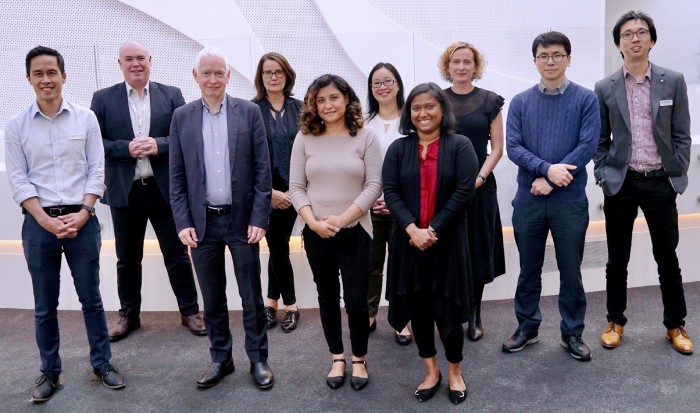
Grant recipient : Professor Michael MacManus, University of Melbourne
Years funded : 2017 – 2019
Summary : An increase in the research activity across Peter MacCallum Cancer Centre’s campuses, which improved equity of access to state-of-the-art clinical trials involving radiotherapy for suburban and regional patients. As a result, the numbers of patients enrolled in clinical trials also increased.
“What is unique and special about the Cancer Trials Management Scheme grant funding is that it supports the infrastructure needed for multiple clinical trials and thus builds capacity, helping to level the playing field for radiotherapy patients.” – Prof Michael MacManus
Read full report
Title: Accessing cancer clinical trials for people of the West
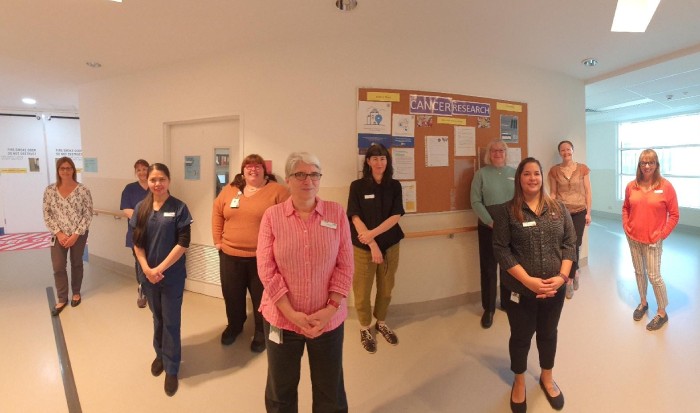
Grant recipient : Dr Dishan Herath and the Western Health Oncology Research Unit
Years funded : 2017 – 2019
Summary : Western Health put the people and infrastructure in place to run early phase clinical trials, before seeking sponsorship funding to attract and maintain this type of activity. Importantly, it also supported the evaluation of strategies to sustainably improve trial participation for patients of culturally and linguistically diverse (CALD) backgrounds and fostered the growth of Western Health’s non-pharmaceutical clinical trial portfolio.
“Thanks to this funding, we have been able to enrol more patients, including CALD patients, onto clinical trials. The support we received for our phase I program has given patients access to new drugs early in the development process" - Dr Dishan Herath, Head of Cancer Services, Western Health
Read full report
Title : Regional Trial Network – Victoria
Grant recipient : Dr Craig Underhill and the Regional Trial Network – Victoria
Years funded : 2017 – 2019
Summary : Increase clinical trials for regional and rural patients and improve collaboration between regional trial units. Since 2017, there has been a 64% increase in recruiting clinical trials at participating sites and a 49% increase in recruited patients. Its success led to a $18.6 million grant from the Australian Government Medical Research Future Fund, to help bridge the metro-regional trials gap.
“This provided us with the start-up funding we needed to demonstrate what could be done to increase clinical trial activity and collaboration in the regions. It has enabled us to apply for and be awarded a significant government grant that now allows us to extend our work and hopefully save the lives of more regional Australians with cancer.” – Dr Craig Underhill
Read full report
Donations made to the Cancer Trials Management Scheme grant program will help support projects seeking to improve equitable access to clinical trials through capacity building. Contact us at partnerships@cancervic.org.au to discuss how you can invest in cancer clinical trials.
Clinical trials reporting
With support from the Victorian Government, Cancer Council Victoria has monitored clinical trial activity and recruitment in Victoria for more than three decades. Readily accessible and reliable data on the breadth of clinical trials is an important tool for the sector to inform access to clinical trials for people affected by cancer.
Changes to clinical trial data collection
Beginning 2023, Cancer Trials Australia will assume responsibility for collecting cancer clinical trial data with the continued support of the Victorian Government. With the recent implementation of a customised software solution, Clinibase, Cancer Trials Australia will reduce the administrative burden associated with how we collect state-wide cancer clinical trial data and improve how it is reported to the sector. This platform will also support enhanced internal site reporting, including meeting new requirements under the National Clinical Trials Governance Framework.
We fully support this change and look forward to working closely with Cancer Trials Australia to progress this transition. You can find more information about the transition in our Frequently Asked Questions.
Latest clinical trials report
We are pleased to share our latest report ‘Reflecting on six years of clinical trial activity and access in Victoria (2016-2021)’. This new report contains data from 37 Victorian clinical trial units that reported data through the Cancer Trials Management Scheme (CTMS) annually from 2016 to 2021. During this time, 10,105 people with cancer participated in cancer treatment clinical trials in Victoria.
Read our latest clinical trials report
Policy and advocacy
Currently, less than 6% of Victorians diagnosed with cancer each year, participate in clinical trials for their cancer treatment. Many barriers exist including limited awareness from clinicians and the public, limited systems and available data, and inequities in accessing clinical trials, including for Aboriginal and/or Torres Strait Islander populations, people from rural and regional areas and of culturally and linguistically diverse backgrounds.
Cancer Council Victoria is committed to improving participation and reducing inequities in access to cancer clinical trials in Victoria.
Read more about our policy and advocacy work
Information and support
Visit the clinical trials section of our website for patient information about clinical trials including patient stories, a free booklet and access to Trial Connect – a telephone peer support program. You can also call 13 11 20 or email us to speak with a cancer nurse.
Learn more
“The opportunity to get a better quality of life, the opportunity of extending your time here with friends and family – I think a lot of people would take that chance to take part in a trial.” - Greg